

Rev360 by NRS: what Nigerian businesses must understand about Nigeria's new digital tax administration system
The Nigeria Revenue Service has launched Rev360, a digital tax administration platform replacing TaxPro Max. Here is what it changes for Nigerian SMEs, accountants, and growing businesses — and how to prepare your records before compliance pressure builds.
The Nigeria Revenue Service (NRS) has officially launched Rev360, a new digital tax administration platform designed to modernise tax compliance, improve transparency, and automate tax processes across Nigeria. This is a major shift in how businesses interact with the tax authority, for SMEs, startups, corporate organisations, consultants, contractors, and growing enterprises, Rev360 introduces a more structured compliance environment where accurate financial records and real-time reporting will increasingly determine whether you operate smoothly or under pressure.
This is not just another government portal. Rev360 represents a broader move toward digital tax administration where accounting systems, financial reporting, and tax compliance are becoming directly connected. Businesses that prepare early will operate with fewer compliance risks, stronger financial visibility, and better operational efficiency.
1 portal
Replaces the older TaxPro Max environment
Real-time
Compliance and reporting verification
24 / 7
Self-service taxpayer access
Monthly
Reconciliations now mission-critical
What is Rev360?
Rev360 is the newly introduced digital tax administration platform developed by the Nigeria Revenue Service as part of its transition into what the authority describes as Tax Administration 3.0. The platform replaces the older TaxPro Max environment and introduces a more integrated system that supports the full taxpayer lifecycle from a single login:
- Tax registration and taxpayer profile management
- Filing of returns across multiple tax types
- Payment processing and digital receipts
- Compliance monitoring and audit management
- Taxpayer communication and self-service operations
- Digital reporting and analytics
The goal is a fully digital tax ecosystem that simplifies compliance for the taxpayer while improving transparency and revenue administration for the state.
Why Rev360 matters for Nigerian businesses
Many Nigerian businesses still operate with fragmented accounting records, delayed reconciliations, manual invoicing, and inconsistent documentation. Under Rev360, those weaknesses become much more visible, the tax environment is moving toward automation, data integration, and faster compliance verification.
This raises the bar on what businesses are expected to maintain:
- Cleaner accounting records that can be queried at short notice
- Better bookkeeping systems, not WhatsApp notes and informal logs
- Proper tax schedules: VAT, WHT, PAYE
- Accurate payroll records reconciled monthly
- Timely bank, supplier, and customer reconciliations
- Stronger internal controls and segregation of duties
- Financial reporting that an auditor or NRS officer could open today
Businesses that already maintain structured accounting systems will adapt fastest. The rest face an unwelcome surprise the first time NRS comes calling.

Key features of Rev360
1. Unified tax management dashboard
Rev360 introduces a centralised dashboard where businesses manage every tax-related activity from one platform. From a single login a taxpayer can access tax records, monitor liabilities, submit returns, make payments, track filing history, respond to compliance requests, and update taxpayer profiles. The reliance on physical visits to tax offices and manual processing drops sharply.
2. Real-time compliance environment
The most consequential change introduced by Rev360 is the move toward real-time reporting and faster verification. The authority can now access financial and compliance data more efficiently than ever before. For businesses, this elevates the importance of:
- Accurate transaction records, captured as transactions happen
- Proper VAT computation on every invoice issued
- Timely filing, the "file at year end" habit no longer works
- Consistent reporting between books, returns, and what NRS sees
- Monthly reconciliation as a non-negotiable process
Watch out
Businesses that wait until year-end to organise financial records will struggle under this structure. Real-time monitoring means real-time visibility, including of gaps.
3. Integration with accounting systems
Rev360 is designed to support deeper integration with accounting and financial systems. That opens the door to automated tax computation, faster reconciliations, reduced manual entry, better audit trails, and stronger reporting accuracy. Businesses already on cloud accounting software or a structured ERP will manage compliance with materially less friction than those still working out of spreadsheets and notebooks.
4. Self-service taxpayer operations
Taxpayers can now manage most activities online, update information, monitor filing status, track obligations, access historical records, and resolve a wide range of compliance issues digitally. This is a significant efficiency win for SMEs that previously burned days navigating tax office queues.
5. Improved audit monitoring
Digital reporting and integrated records dramatically improve audit visibility. Businesses with weak documentation will face increased compliance pressure. Proper bookkeeping and financial organisation are no longer a "nice to have", they are now the difference between a clean audit and a costly one.
What "Tax Administration 3.0" means
Rev360 is part of Nigeria's transition toward what tax authorities describe as Tax Administration 3.0. In practical terms, that means:
- More automation across the taxpayer lifecycle
- Continuous digital monitoring rather than periodic checks
- Faster verification of returns and payments
- Reduced manual intervention from tax officers
- Stronger data matching across systems and banks
- Increased transparency for both taxpayer and authority
- Stronger enforcement capability where compliance lapses
This aligns Nigeria with global trends, governments worldwide are migrating to fully digital tax administration, and businesses operating across borders increasingly expect it.
How Rev360 will affect SMEs in Nigeria
Many SMEs still depend on:
- Manual bookkeeping carried in a notebook or single spreadsheet
- Incomplete or skipped sales records
- Unstructured payroll, often paid by transfer with no payslip trail
- Delayed bank reconciliation, sometimes only at year-end
- Scattered Excel files across phones, laptops, and email
- Informal documentation that cannot be reproduced on demand
Under Rev360, those gaps can quickly translate into:
- Filing inconsistencies flagged by the system automatically
- Tax exposure risks that grow month over month
- Compliance penalties for late or inaccurate returns
- Delayed processing of refunds, clearances, and certificates
- Difficulty during NRS audits when records cannot be produced
This is not a reason to panic. It is a reason to fix accounting structure before the compliance pressure compounds.
What Nigerian businesses should do immediately
1. Organise financial records
Records must be complete, accurate, and regularly updated. Every business should maintain sales schedules, expense records, payroll records, bank reconciliations, VAT schedules, withholding tax schedules, an asset register, and the supporting documentation that proves every entry.
2. Strengthen bookkeeping processes
Move away from disorganised manual systems. Structured accounting improves reporting accuracy, compliance management, decision-making, financial visibility, and operational control. A clean monthly close is now a competitive advantage, not a luxury.
3. Reconcile accounts monthly
Monthly reconciliation surfaces issues early, long before filing deadlines force them into view. At a minimum, reconcile:
- VAT (output, input, net)
- PAYE schedules against payroll
- Bank statements against the books
- Supplier balances against vendor statements
- Customer balances against your accounts receivable
4. Improve internal controls
Strong internal controls reduce financial errors and improve accountability. Separate responsibilities across payment approval, record keeping, bank management, reporting, and tax compliance oversight. No single person should control a transaction from start to finish.
5. Invest in digital accounting systems
Businesses on modern accounting systems will adapt fastest. Cloud accounting, automated reporting tools, and workflow automation deliver a step-change in compliance efficiency compared with paper or single-spreadsheet processes.
Opportunities created by Rev360
Rev360 introduces stricter compliance expectations, but for businesses with structured records, the platform also opens up real operational benefits.
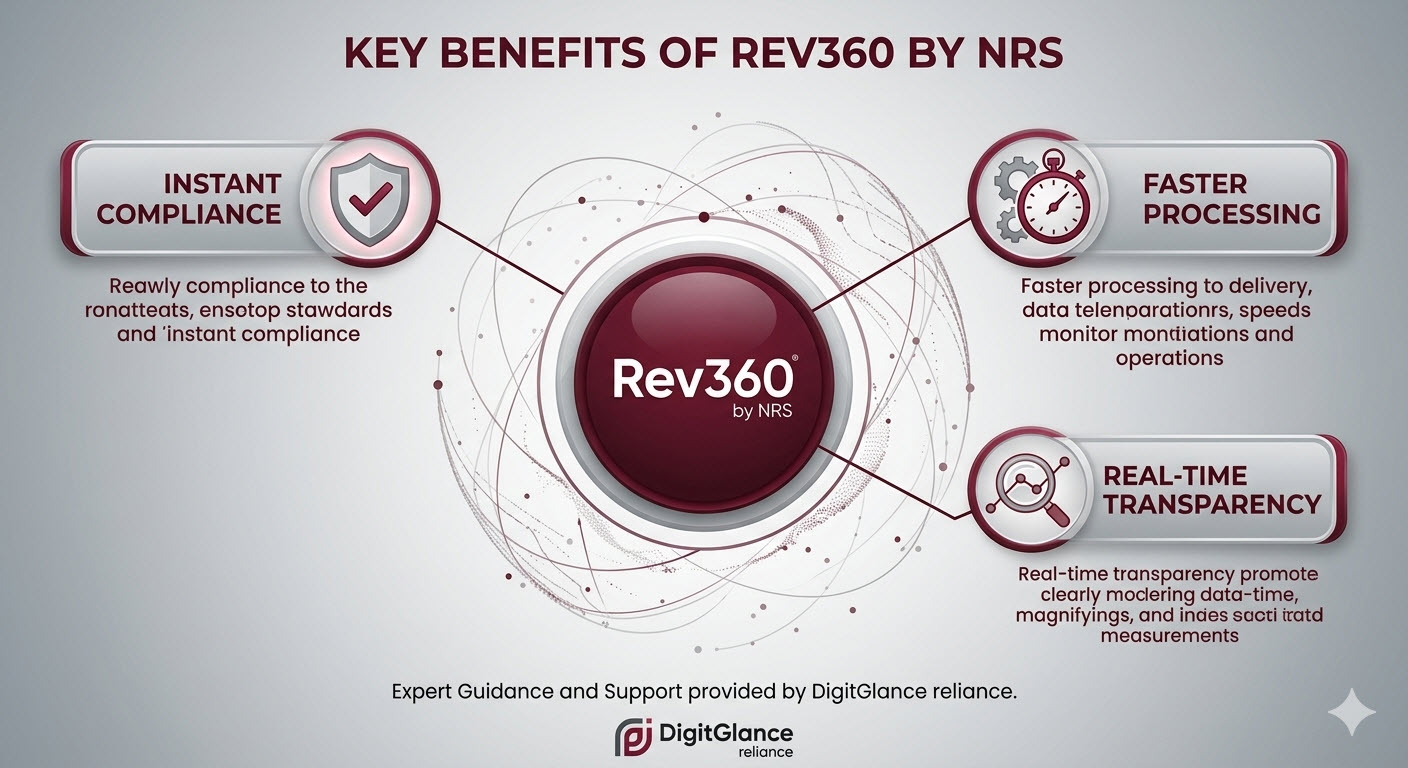
- Faster processing. Digital systems eliminate the delays of physical paperwork and manual review.
- Better transparency. Businesses gain clear visibility into filing history, liabilities, and compliance status.
- Fewer physical visits. Most taxpayer interactions can now happen online.
- Stronger financial discipline. Proper accounting drives stronger operational control and better decisions.
- Higher data accuracy. Automation eliminates errors that creep into manual tax computation and reporting.
The role of accountants and business consultants
Rev360 raises, not lowers, the value of professional accounting support. Businesses will increasingly need expertise in tax advisory, accounting system setup, monthly reconciliation support, compliance monitoring, financial reporting, internal control reviews, and process automation. For SMEs, the right accountant or business technology partner now pays for themselves several times over by keeping compliance risk in check.
How DigitGlance Reliance supports businesses
At DigitGlance Reliance we help Nigerian businesses build the structured accounting and compliance systems Rev360 expects. Our services include:
- Accounting system implementation
- Financial reporting support
- Tax compliance advisory
- Excel and VBA automation
- Business workflow automation
- Reconciliation process setup
- SME finance process improvement
- Internal control reviews
Our DigitGlance Trade product (invoicing and point of sale in one) is built for Nigerian compliance from the ground up, automatic VAT capture on every invoice, NRS-ready output and input VAT reports, monthly reconciliation by branch, and audit trails that survive any review. As Nigeria moves deeper into digital tax administration, you need software that supports accuracy, visibility, and compliance by default.
Bottom line
The businesses that prepare early, with clean records, monthly reconciliation and real systems, will move through Rev360 with almost no friction. The businesses that wait will discover the cost of doing nothing once their first compliance flag goes up.
Final thoughts
Rev360 represents a major shift in Nigeria's tax administration environment. The era of disorganised records, delayed reconciliation, and weak compliance processes is becoming increasingly risky for businesses. Companies that maintain accurate records, structured accounting systems, and strong financial controls will adapt successfully to the new environment.
For SMEs and growing businesses, this is the right time to strengthen bookkeeping, improve financial reporting, and invest in digital accounting systems. The businesses that prepare early will position themselves for smoother compliance, stronger operational control, and better long-term growth.
Track your books, file VAT, and get paid faster.
DigitGlance Trade handles invoicing, POS, VAT, inventory, and reports so you can focus on running the business, not on chasing receipts.